Work instruction template, free (Word and PDF)
A shop-floor work instruction template, ready to fill in: one task, step by step, with a picture, a key point and a check for each step. Download it as a Word file to edit, or as a PDF. It's free, with no sign-up.
The Word file also opens in Google Docs and LibreOffice. Both are A4.
The step pictures, from your CAD model
Clear pictures are what make a work instruction work. If you have the assembly as a STEP file, Lineplate draws them: each step's parts picked out, with balloons that match the parts table. These are from the example manual.
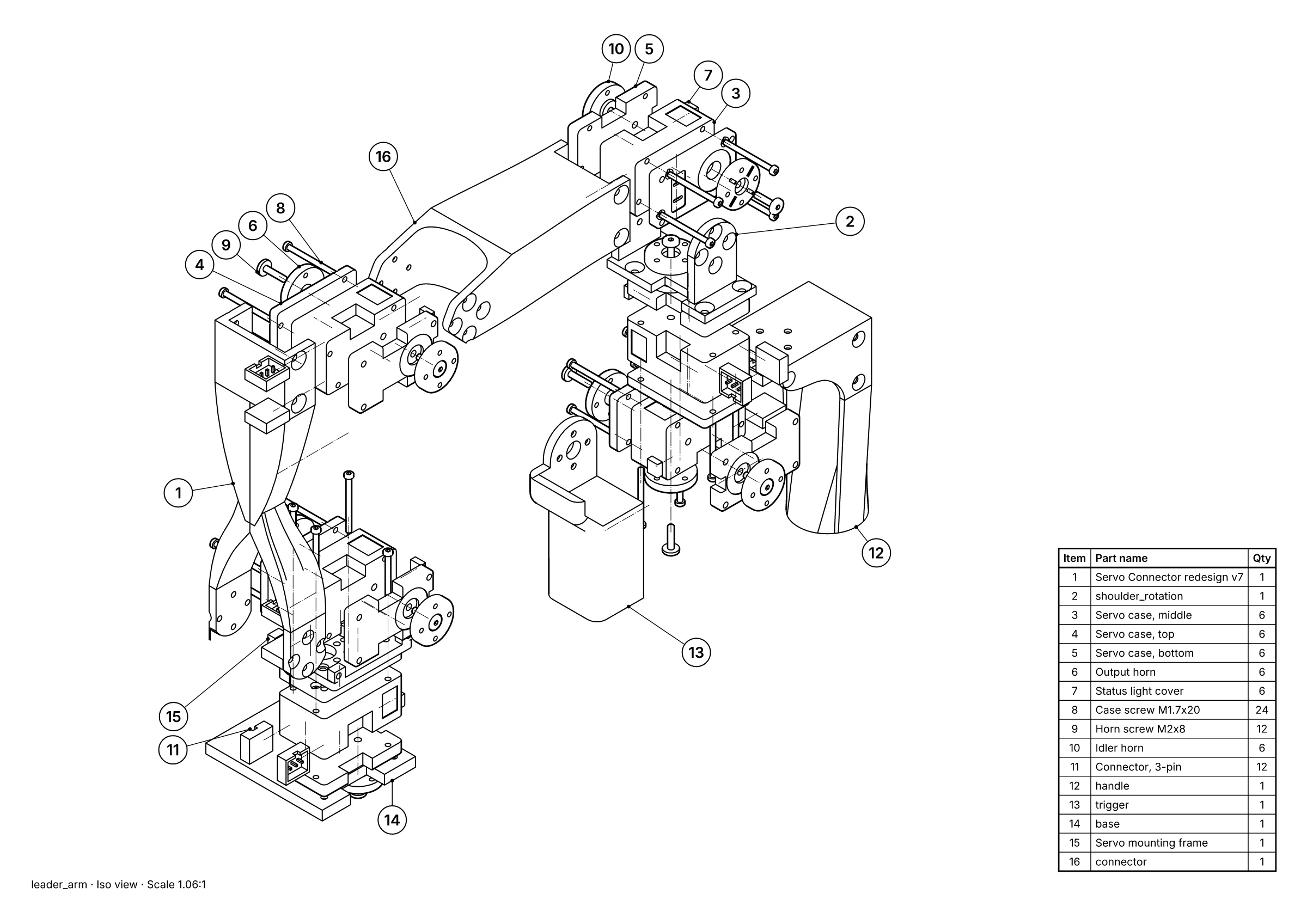 A parts page: exploded view, 16 balloons and the parts list, placed for you.
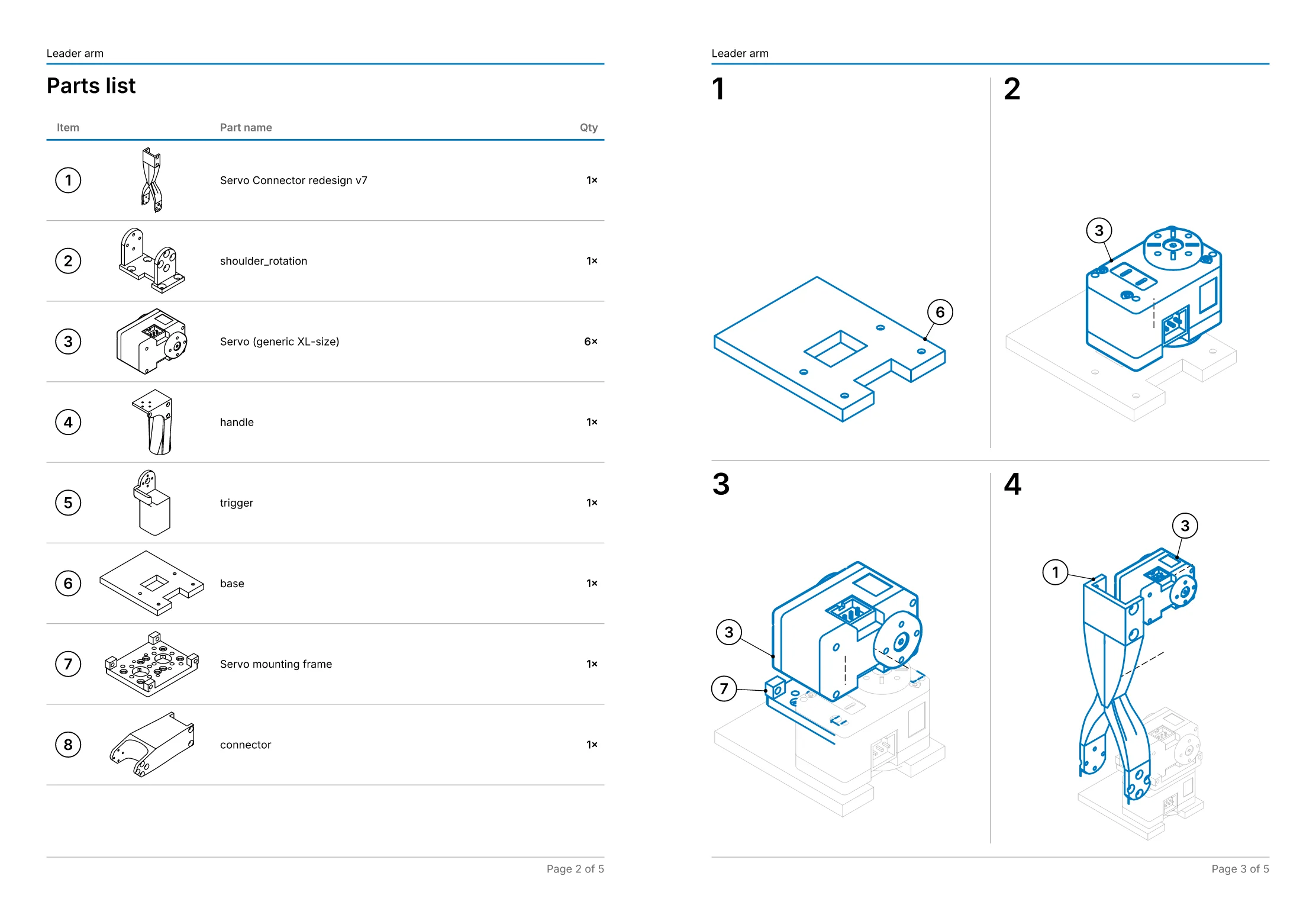 An assembly manual: 11 steps on 5 pages, worked out from the explosion.
- Free, in the studio. Exact hidden-line drawings and exploded views of up to 250 parts, as SVG, DXF, PDF or PNG, with no account.
- Pro, £49 a month per editor. Balloons and parts lists, step-by-step assembly manuals as PDF, your own title block and logo, and drawings that follow the CAD when it changes. Just one job? Project pass: Pro for 30 days, £79 once, with nothing to cancel.
- Or we draw it for you, from £150. Send the STEP file and we draw one view free first, so you can judge it before you pay anything. Drawings done for you.
What's in the template
- A document control block: number, revision, product and part number, station, cycle time, effective date, and who prepared and approved it.
- Purpose and scope, so it's clear which products and stations it covers.
- Safety notes and the personal protective equipment needed.
- Tools, equipment and their settings (torques, fixture numbers, calibration).
- A parts and materials table with item numbers, part numbers and quantities.
- Four numbered steps, each with a picture space, what to do, a key point and a check. Copy a row to add more.
- Quality checks, what to do when something is wrong, a revision history and a training sign-off.
Everything you need to replace is in [square brackets], in grey italics, so nothing gets missed.
How to write one that gets followed
- One task per instruction, and one action per step.
- Use the item numbers from the parts table in every step, and in the pictures.
- Put the reason in the key point: the torque, the orientation, the thing that goes wrong if it's skipped.
- End each step with a check the operator can see, so a mistake is found before the next step hides it.
- Watch someone new use it. Wherever they hesitate, the instruction needs work.
For instructions that ship with a product rather than stay on the shop floor, the assembly instructions template is laid out for customers. A template doesn't make a process meet a quality standard, and this one makes no such claim.
Doing this for many products? Work instructions from your CAD model says what Lineplate does for the pictures and the step pages.